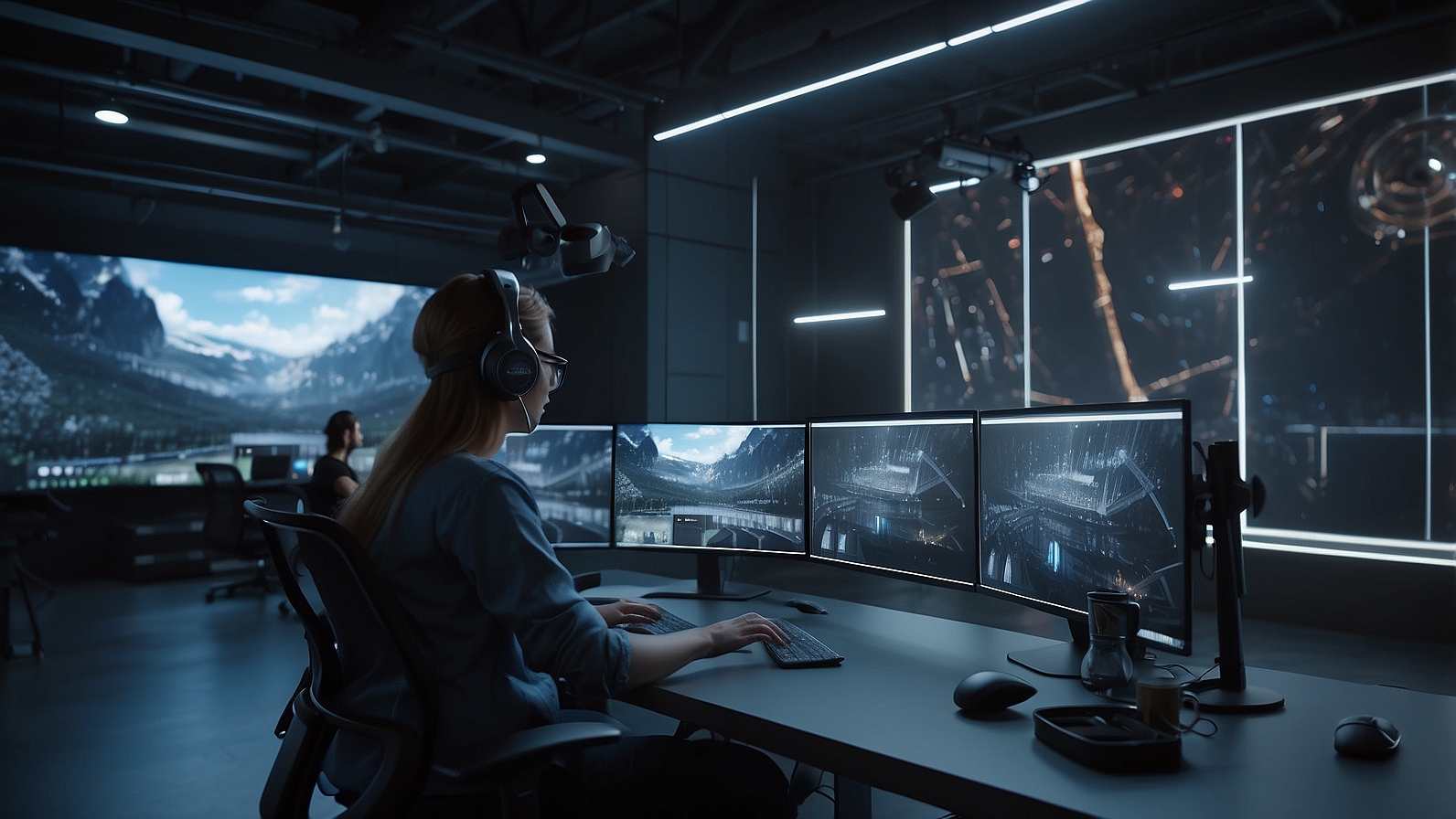

The traditional production workflow for films, commercials, and branded content often involves long hours on physical sets, expensive locations, and complex post-production. But technology has changed the game. With Unreal Engine and real-time virtual production, agencies and brands can create high-quality, cinematic content faster, more efficiently, and with unparalleled flexibility.
This post explores how virtual sets and real-time production empower creators to save time without sacrificing visual quality, offering a practical solution for modern video production.
1. What Are Virtual Sets?
A virtual set is a digitally created environment used in video production instead of—or alongside—physical locations:
- Fully customizable: Change lighting, props, and backgrounds instantly.
- Realistic or imaginative: Create photorealistic cityscapes or fantastical environments.
- Interactive: Actors and camera operators can interact with digital elements in real-time.
Virtual sets remove the constraints of physical production, enabling creativity without limits.
2. Real-Time Rendering with Unreal Engine
Unreal Engine allows for real-time rendering, meaning what you see on the monitor is almost identical to the final output:
- Immediate visual feedback for directors and cinematographers.
- Faster iteration on camera angles, lighting, and composition.
- Reduced reliance on long post-production rendering cycles.
This accelerates the production process, allowing teams to make decisions on the fly without waiting hours for renders.
3. Time and Cost Efficiency
Virtual sets and real-time production save time and resources:
- Eliminate the need for travel, location scouting, and building physical sets.
- Reduce crew and equipment requirements for complex scenes.
- Enable multiple iterations in hours instead of days, minimizing costly reshoots.
The result is high-quality content produced faster and at a lower cost, making it ideal for brands with tight deadlines.
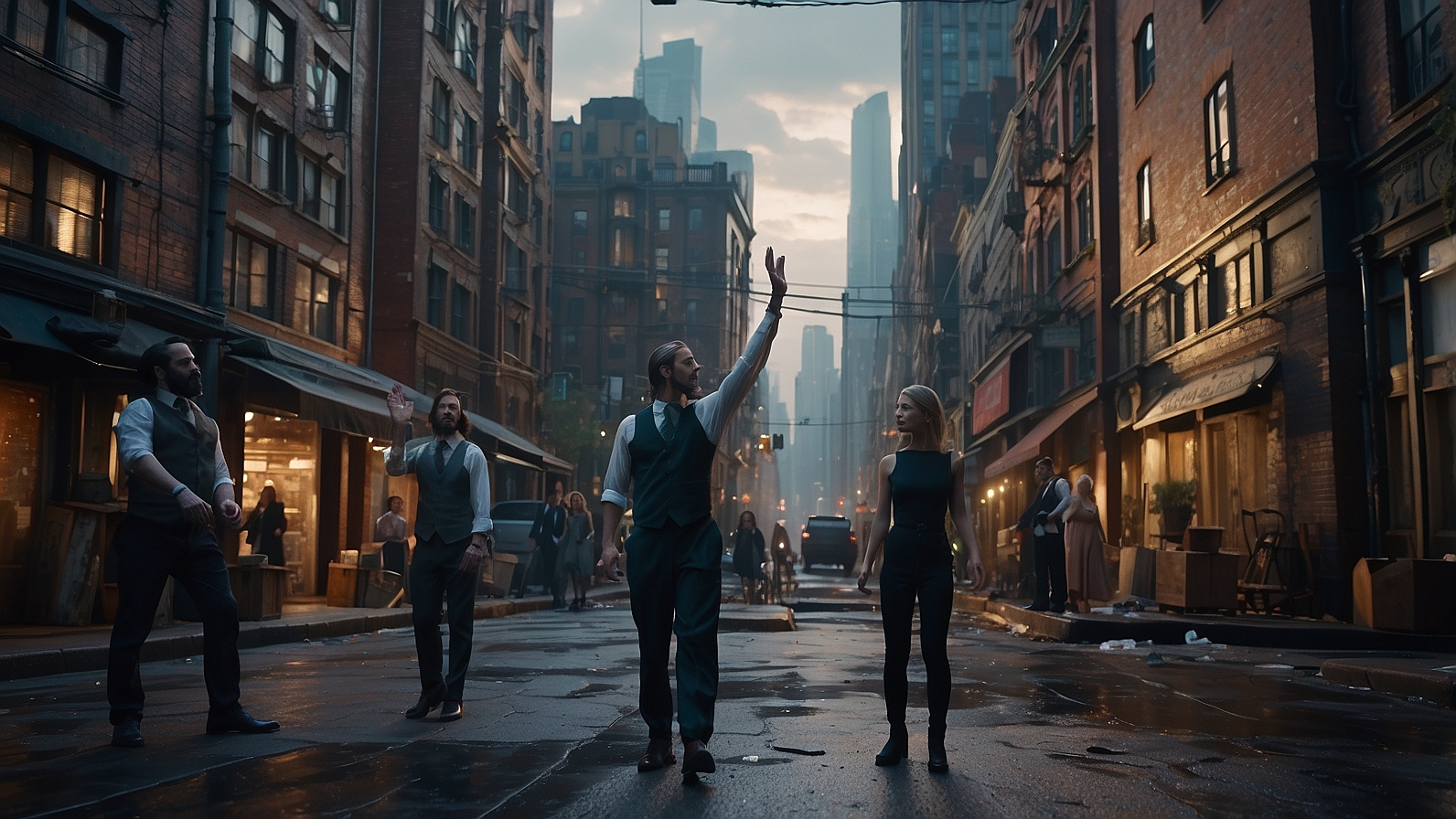
4. Seamless Integration of Physical and Digital Elements
One of the strengths of virtual production is blending real and digital worlds:
- Green screens allow actors to perform in front of digital sets.
- Mixed reality workflows combine physical props with virtual environments.
- Realistic lighting and shadows ensure the final output is indistinguishable from traditional production.
This hybrid approach delivers cinematic realism while maintaining production flexibility.